
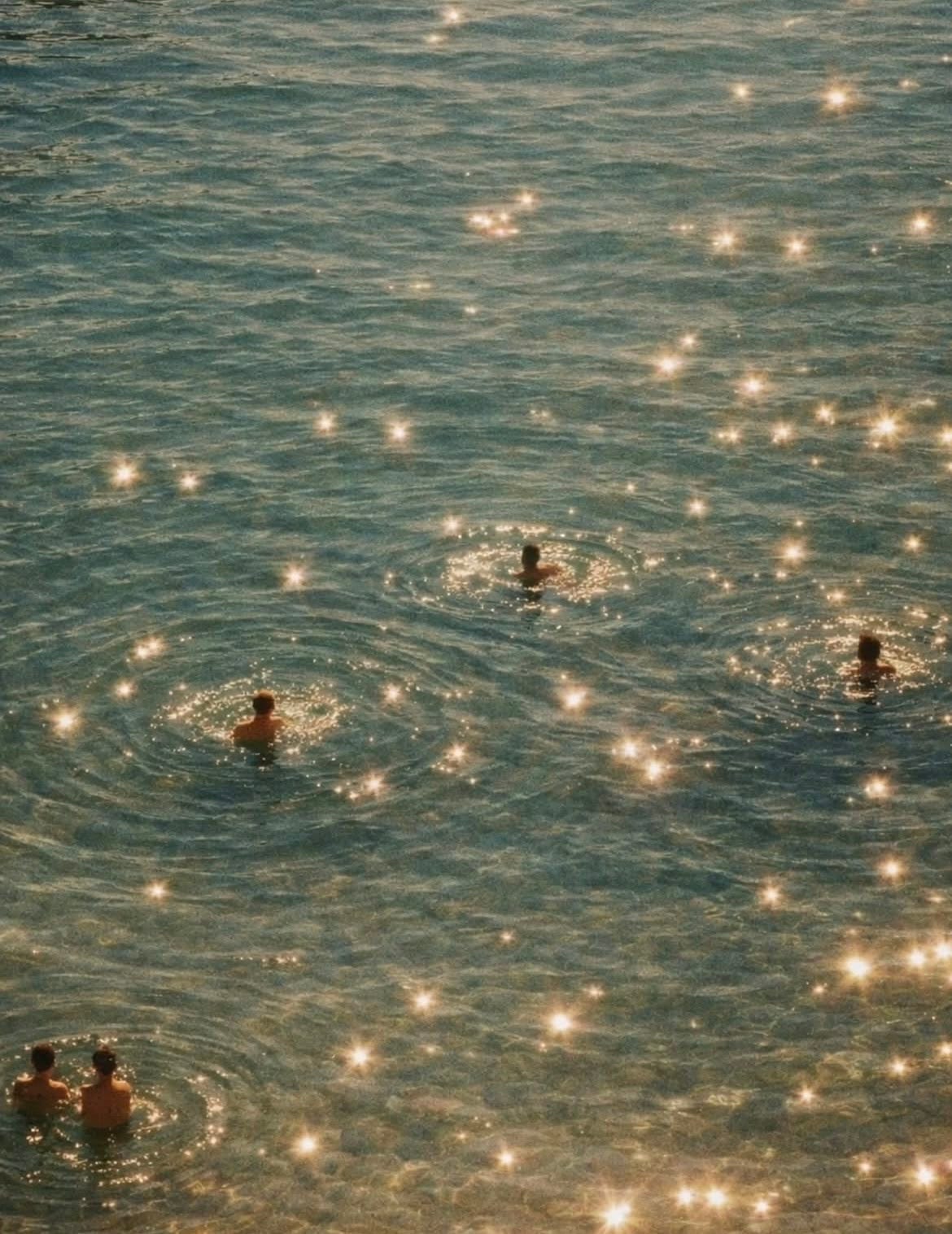
We are sold summer as the great liberation. School ends. Parliament goes into recess. The social machine stalls. For two months, the ordinary structures of authority and routine are suspended and English fiction has spent over a century exploiting that suspension to catastrophic effect. The long summer, it turns out, is not a holiday from consequence. It is the condition under which consequence becomes inevitable.
The country house as pressure cooker
The geography of the English summer novel is strikingly consistent: a house, a garden, a cast of people who cannot quite leave. In Agatha Christie, the country house functions as a closed system, sealed from the outside world by social convention as much as by distance. And Then There Were None literalises this with an island; Evil Under the Sun traps its guests on a Devonshire headland in the height of August. The sun, in Christie, does not liberate. It bleaches everything into the same merciless clarity. Nobody can hide from it, which is precisely why someone always tries.
Christie’s summer resorts are places where the usual performance of identity, profession, class, domestic role is voluntarily stripped away, replaced by swimming costumes and gin. The murder, when it comes, is a restoration of order more than a disruption of it. Something had to give.
The children who see too much
If Christie uses summer to strip adults of their pretensions, a darker strand of English fiction sends children into the heat and lets them misread what they find. In L.P. Hartley’s The Go-Between, Leo spends a Norfolk summer ferrying letters between a farmer and an aristocratic girl, too young to understand what he is carrying. The novel’s famous opening “the past is a foreign country: they do things differently there” is a retrospective flinch. The summer of 1900 is where Leo’s capacity for intimacy was destroyed, in a heatwave, by adults who used him without knowing they were doing so.
Ian McEwan does almost exactly the same thing in Atonement: Briony Tallis, thirteen, at a country house in 1935, misinterprets a scene at a fountain and sets in motion a catastrophe that unravels across decades. The English summer, in both novels, is the season of the misread sign where children old enough to observe but not yet old enough to interpret become unwitting agents of ruin.
Lolita and the American inheritance
Nabokov, writing as an outsider in America, borrows the structure. Lolita is a road novel, but its catastrophic hinge is a summer Dolores Haze encountered at a New England guesthouse in the heat, her mother conveniently killed by a car shortly after. The sun-drenched motel swimming pool, the lawn chairs, the languor of the school holidays; Nabokov surrounds his atrocity with the full iconography of the innocent summer. The effect is one of almost unbearable irony. Humbert’s crime is inseparable from the season’s promise of freedom.
The island and the end of everything
William Golding strips the metaphor bare. Lord of the Flies is explicitly set during what should be a summer idyll, boys on a beautiful tropical island, no adults, no school. The horror is not imported from outside. It emerges from the suspension of structure itself. Ralph’s attempts to maintain order (the conch, the fire, the shelter) are the residue of the civilised calendar, timetables, duties, bells. When summer logic prevails, play, appetite, the present moment - Piggy dies.
Why summer, specifically?
The question worth sitting with is why the season keeps producing the same result. The answer, I’d argue, is structural rather than symbolic. Summer in England represents a genuine lacuna in the social timetable, the only extended period in which the usual machinery of accountability is officially offline. Courts recess. Schools close. The country house, the holiday resort, the island: these are all spaces temporarily outside the normal order, governed instead by hospitality, leisure, and the implicit agreement that ordinary rules are suspended.
Fiction has always been drawn to liminal spaces. But summer is unusual in that it is a scheduled liminality, everyone knows it will end. The catastrophe in these novels arrives precisely in that window, like something that has been waiting for the guardrails to come down. Christie’s murderer has been planning since before August. Leo’s summer had to end with the harvest. Briony’s letter was always going to be written. The heat simply made it possible.
The structure that keeps returning
We still reach for this structure because the underlying condition has not changed. Every summer, the social timetable genuinely does pause. The out-of-office autoreplies stack up. The streets empty. And into that pause, fiction keeps pouring the same thing it always has: the consequences we have been deferring. The affair that couldn’t happen in February. The confrontation that required a lawn and a long evening. The truth that only emerges when everyone is slightly underdressed and slightly drunk and nowhere near a train.
There is something almost consoling in the persistence of the pattern. It suggests that English writers have always known what the rest of us prefer not to admit, that the season we spend anticipating is also the one we least know how to survive. The summer is not the break from real life. It is the moment real life catches up.